
Being Well-Born
A One-Hundred-Year Reckoning with Science, Power, and the “True Worth of Every Human Soul“
By Kevin Todd Brough, M.A., MFT
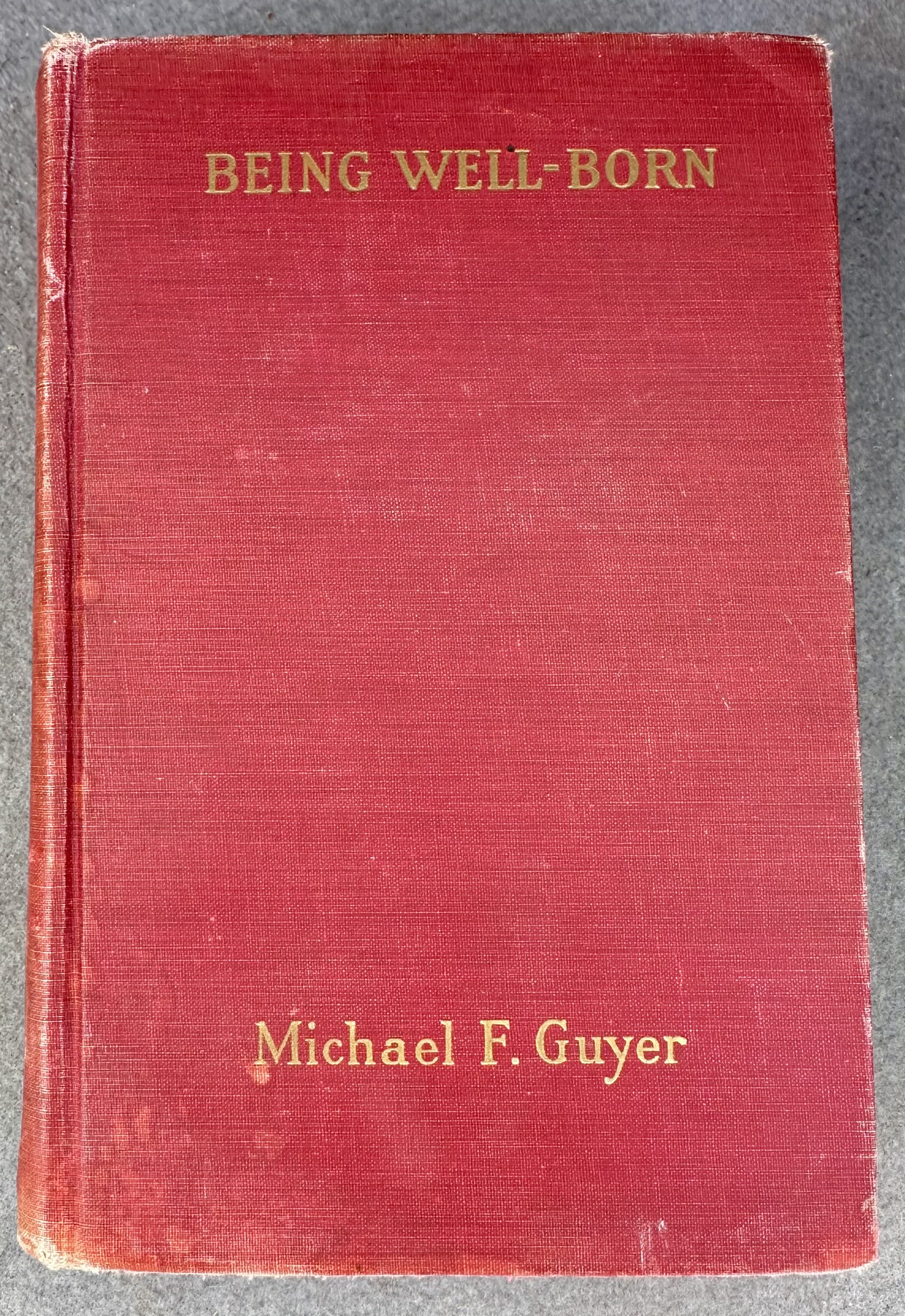
After my mom died in 2023, we were going through the final items in my parents’ home, the kind of work that mixes grief with nostalgia and the occasional surprise. My daughter (Carly) wanted some old books to use as vintage decor and found some tucked away on a shelf; some were my father’s forgotten high school and college textbooks.
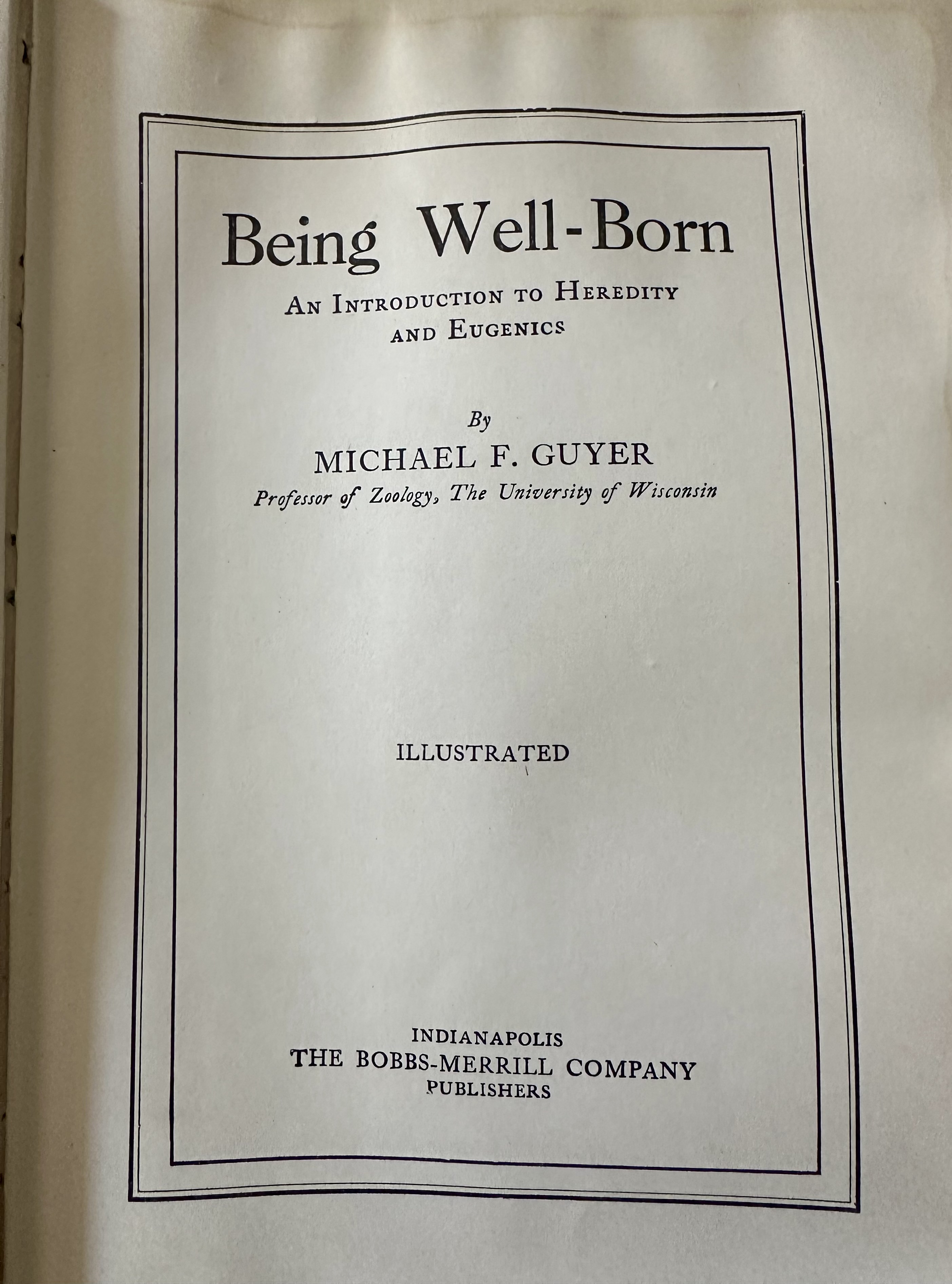
Recently, while visiting Carly, another daughter (Allie) asked whether my father had believed in Eugenics? (since one of his old books seemed to support it.) Allie, being the bookworm she is, apparently had looked at the books and, like me, not knowing the history of the book, was perplexed by it. Among the old books Carly chose for decor was the worn red hardcover that Allie was referring to, its spine cracked with age. I pulled it out, turned it over, and read the title page:
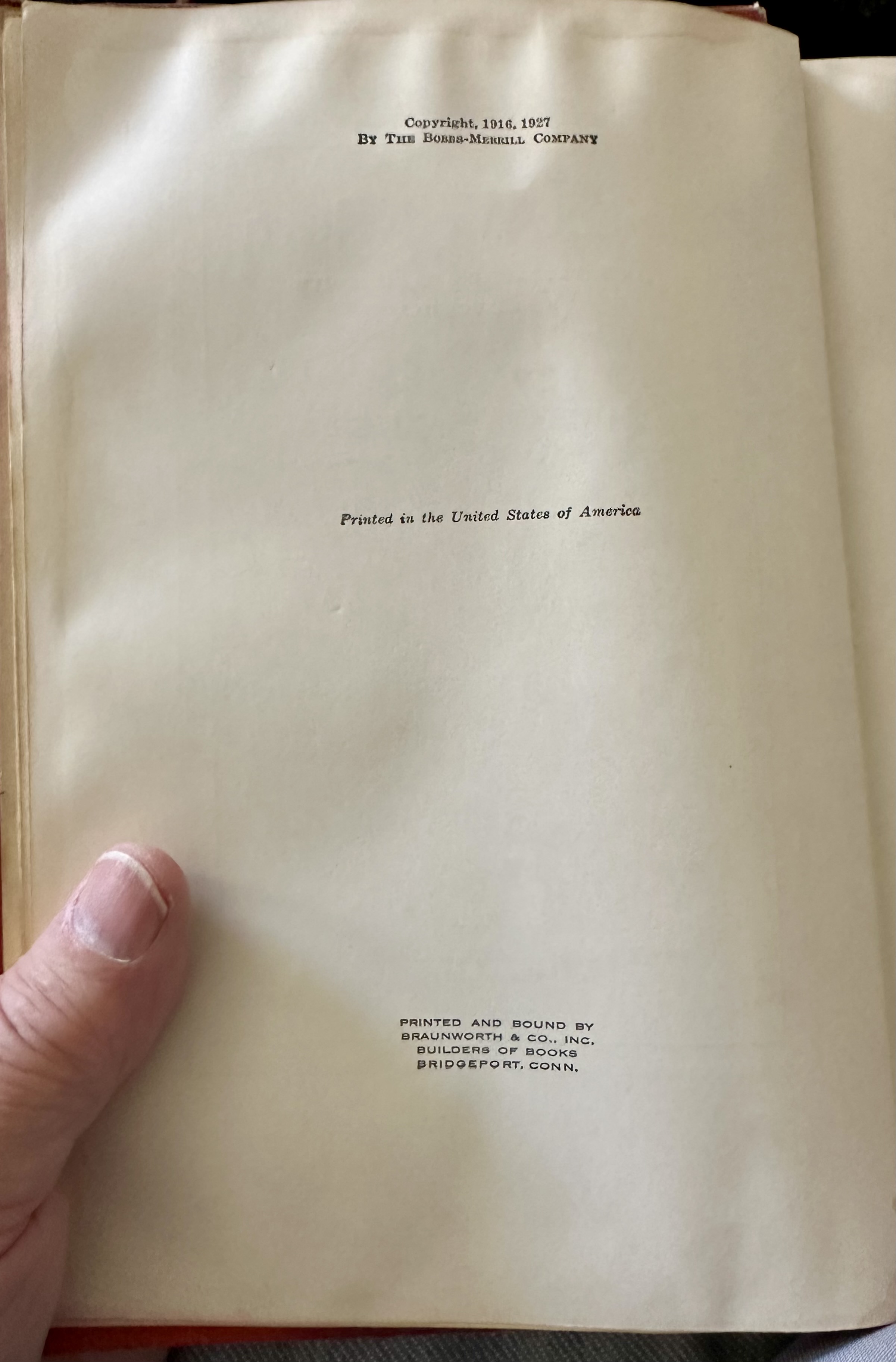
Being Well-Born: An Introduction to Heredity and Eugenics Michael F. Guyer, Professor of Zoology, University of Wisconsin The Bobbs-Merrill Company, Publishers. Copyright 1916, 1927.

My father, a product of the 1940s educational system, had kept this book from a high school health class. (Knowing how much he saw the best in others, he obviously had not absorbed what he had been taught in the text and stayed true to his heart.) He probably had no idea that the science inside it was built on ideology as much as evidence, or that the public policies it helped inspire would devastate millions of lives. He just knew what his teachers told him: this was biology. This was progress. This was how a modern society cares for itself. That was a fallacy to say the least. (A few years later, in 1954-1955, while in the military, he was stationed in Germany after the war and saw the devastation caused in Europe by this fallacy)
I am currently a Marriage and Family Therapist, but I have worked in addiction recovery for over twenty years. I sit with people every week who are carrying wounds they did not earn, shame they did not deserve, and identities shaped by systems that reduced them to diagnoses, deficits, and dangers. And holding this book — this artifact of the age that created so many of those wounds. “I felt something crystallize”.
This book is a touchstone. Not a guide. A warning. A 100-year-old mirror that forces the question: How do we do better? And how do we build a future that finally puts human beings at the center of the story?
“The purpose of psychology is to give us a completely different idea of the things we know best.” — Paul Valéry
The Seduction of Mendelism: When Simple Science Met Complex Humanity
The textbook Guyer wrote in 1916, revised in 1927, was saturated with references to Mendelian genetics — the inheritance model based on the landmark work of Gregor Johann Mendel (1822–1884), an Augustinian friar and botanist whose meticulous pea plant experiments in the monastery gardens at Brno laid the groundwork for modern genetics. Mendel tracked how traits like seed color and pod shape passed between generations, articulating what would become known as the Law of Segregation and the Law of Independent Assortment. He published his findings in 1866 and was almost entirely ignored for over thirty years (Henig, 2000).
In 1900, three European botanists independently rediscovered his work, and ‘Mendelism’ became an overnight scientific revolution. For researchers and educators in the early 20th century, it felt like the key to unlocking the blueprint of life itself. Unfortunately, the reach of that excitement extended far beyond what the science actually supported. By the 1920s, educators like Guyer were teaching students that intelligence, criminality, ‘feeble-mindedness,’ and moral character were heritable traits governed by simple dominant-recessive genetic rules — traits that could, in theory, be bred in or out of the human population (Kevles, 1985).
This was catastrophically wrong. We now know that virtually all meaningful human behavioral traits are polygenic — shaped by hundreds to thousands of genetic variants interacting dynamically with epigenetic, developmental, and social factors, as well as trauma history and countless other variables. There is no single gene for intelligence, for mental illness, or for moral character (Plomin et al., 2016). But in 1927, that knowledge did not yet exist. What existed was a powerful idea — and powerful ideas in the hands of powerful institutions are dangerous.
From Theory to Atrocity: The Eugenics Movement and Its Human Cost
The eugenics movement, coined by Francis Galton in 1883, took Mendelian theory and applied it with devastating confidence to social policy. In the United States, it became mainstream academic consensus, taught in universities, promoted by scientific societies, endorsed by public health officials, and embedded in textbooks exactly like the one I found on my parents’ shelf (Black, 2003).
The policy implications were swift and brutal. State institutions were built to segregate those deemed ‘unfit’ people with intellectual disabilities, epilepsy, mental illness, and often simply poverty, from the general population. In 1927, the same year Guyer’s revised textbook was published, the U.S. Supreme Court handed down its decision in Buck v. Bell, upholding the forced sterilization of Carrie Buck, a young Virginia woman deemed ‘feeble-minded.’ Justice Oliver Wendell Holmes wrote, in one of the most chilling sentences in American legal history: ‘Three generations of imbeciles are enough’ (Lombardo, 2008). Over the following decades, more than 60,000 Americans were forcibly sterilized under state eugenics laws. The majority were poor women. Many were women of color. Many were simply people without the power to resist.
Feeble-Mindedness, Insanity, and the Architecture of Exclusion
Guyer’s textbook, like most health and biology texts of the era, drew a sharp distinction between ‘feeble-mindedness’ and ‘insanity.’ Feeble-mindedness, a term encompassing what we would now call intellectual and developmental disabilities, was considered the more dangerous category because, unlike the overtly psychotic, the ‘moron’ (the highest functioning tier in psychologist Henry Goddard’s classification system) could pass in society, reproduce, and allegedly contaminate the gene pool (Trent, 1994).
The diagnostic criteria for these categories were shockingly broad and explicitly discriminatory. IQ tests administered in English were used to classify newly arrived immigrants as intellectually deficient. Poverty and social deviance were treated as symptoms of hereditary weakness. Unwed mothers, petty criminals, and people with physical disabilities were all funneled into a system that labeled them burdens, liabilities to be managed, segregated, and ultimately prevented from reproducing.
What was framed as science was, in truth, the medicalization of social prejudice. The institutions built to ‘care for’ these populations were often warehouses of neglect, abuse, and systematic dehumanization, a legacy that continued well into the second half of the 20th century (Rothman, 1990).
“Everything can be taken from a man but one thing: the last of the human freedoms — to choose one’s attitude in any given set of circumstances.” — Viktor Frankl, Man’s Search for Meaning (1946)
Viktor Frankl and the Final Verdict on Eugenics: Not Just Wrong — Evil
The eugenics movement reached its logical and moral terminus in Nazi Germany. The architects of the Holocaust did not invent eugenics; they imported it. American eugenic legislation, including the sterilization programs upheld in Buck v. Bell, was explicitly cited as a model by Nazi policymakers (Kühl, 1994). What American institutions practiced on thousands, the Nazi state scaled to millions.
Viktor Frankl, a Viennese psychiatrist and Holocaust survivor who lost his parents, his brother, and his pregnant wife in the camps, did not merely survive Auschwitz. He emerged with a philosophy that directly refuted everything eugenics stood for. In Man’s Search for Meaning (1946), Frankl described witnessing the extremes of both human brutality and human dignity within the same walls and argued that the will to meaning, not genetics, not race, not breeding, is the primary motivating force of human life.
Frankl’s logotherapy rests on three irreducible convictions that eugenics denied: (1) that life has unconditional meaning, even in suffering; (2) that every human being possesses inalienable freedom to choose their response to any circumstance; and (3) that the value of a human life cannot be calculated, ranked, or revoked (Frankl, 1946/2006). The eugenicist’s world was one in which some lives were worth more than others, and in which the state had the authority to decide who should be born. Frankl’s world, the world reconstructed from the rubble of Auschwitz, insists that every single human soul is an irreplaceable bearer of meaning.
Eugenics was not simply a scientific error. It was an ethical catastrophe. It dressed the murder of dignity and eventually the murder of people, in the language of progress. And the victims of that catastrophe are still among us, not only as history but as lived inheritance: the descendants of those sterilized, institutionalized, and erased, and the clients who sit across from me carrying shame that was never theirs to carry.
A Promise Broken: Deinstitutionalization and Its Unfinished Business
By mid-century, the moral and scientific foundations of the eugenics era were collapsing. The discovery of chlorpromazine (Thorazine) in 1954 (the first antipsychotic medication) opened the possibility of community-based care for people with serious mental illness. Combined with a growing civil rights consciousness and mounting evidence of abuse within state psychiatric institutions, this set the stage for one of the most ambitious social policy shifts in American history.
President John F. Kennedy signed the Community Mental Health Act in 1963, setting in motion the deinstitutionalization of hundreds of thousands of Americans from state psychiatric hospitals. The intent was genuinely humanizing: to move people out of isolated, often dehumanizing institutions and into the fabric of community life, supported by a nationwide network of community mental health centers (Grob, 1994).
The execution was a generational failure.
Congress never fully funded the community mental health center system Kennedy envisioned. State governments, eager to shed the costs of institutional care, closed psychiatric beds without building the community infrastructure to replace them. Between 1955 and 1994, the number of patients in state psychiatric hospitals dropped from approximately 560,000 to fewer than 72,000, a reduction of nearly 87%, without a commensurate investment in outpatient services, housing, or crisis support (Torrey et al., 2012).
The result was a tragedy that unfolded in slow motion across American cities and communities. People with serious, untreated mental illness, discharged from hospitals with nowhere to go and inadequate support to get there, became vastly overrepresented in two new institutions: homeless shelters and jails.
The Criminalization of Mental Illness
Today, the three largest psychiatric inpatient facilities in the United States are not hospitals. They are the Los Angeles County Jail, Rikers Island in New York, and the Cook County Jail in Chicago (Fuller et al., 2016). An estimated 20% of inmates in jails and 15% of inmates in state prisons have a serious mental illness, rates roughly three to five times higher than in the general population (Prins, 2014). The criminal justice system has, by default, become the nation’s primary mental health system for those with the fewest resources.
Homelessness tells the same story. Approximately 30% of the chronically homeless population, those with the longest and most entrenched housing instability, have a serious mental illness (Substance Abuse and Mental Health Services Administration, 2020). Many cycle between emergency rooms, jail cells, shelters, and the street in a loop that costs enormously in human suffering and in public dollars, without ever addressing the underlying clinical need.
This is not an accident of history. It is the direct and predictable consequence of a policy that was right in its vision; community, dignity, inclusion, and catastrophic in its underfunding. We moved people out of institutions without building the world they needed to live in. And the people who paid the price were, once again, among the most vulnerable.
The parallel to the eugenics era is not coincidental. In both cases, systems that should have served human beings instead served institutional and economic interests. In both cases, people with mental and behavioral health needs were treated as problems to be managed rather than persons to be supported. The methods changed; the deprioritization did not.
“Between stimulus and response, there is a space. In that space is our power to choose our response. In our response lies our growth and our freedom.” — Viktor Frankl
One Hundred Years of Reckoning: The Shift That Has Happened
It would be dishonest to look only at the failures. In the hundred years since Guyer’s textbook was published, the mental and behavioral health field has undergone a transformation that represents one of the most significant expansions of moral and scientific understanding in human history.
George Engel’s biopsychosocial model (1977) formally replaced biological reductionism with an integrated framework that recognizes biological predisposition, psychological development, and social context as inseparable contributors to health and illness. The DSM-III (1980) shifted diagnosis toward observable, symptom-based criteria, reducing the influence of purely ideological categorization. The emergence of trauma-informed care, anchored in research like the landmark Adverse Childhood Experiences (ACE) study (Felitti et al., 1998) This demonstrated that what we labeled as disorder was often an adaptive response to overwhelming experience.
The neurodiversity movement has reframed conditions like autism and ADHD not as defects to be corrected but as different neurological architectures that carry their own legitimate ways of being in the world (Armstrong, 2010). Epigenetics has dissolved the old nature-versus-nurture binary by demonstrating that environment and experience literally alter gene expression, that trauma, poverty, and adversity leave measurable biological marks that can persist across generations (Meaney, 2010). The very science that was used to justify eugenics now demonstrates that human beings cannot be reduced to their genetics.
Recovery-oriented, strengths-based clinical models, solution-focused brief therapy, Internal Family Systems, narrative therapy, and acceptance and commitment therapy all place human agency, meaning, and resilience at the center of the therapeutic enterprise rather than pathology and deficit. These are not merely technical advances. They represent a fundamental reorientation of what clinical practice is for.
Going Forward: A Vision for the Next Hundred Years
Finding this book on my parents’ shelf did not leave me feeling defeated. It left me feeling clear. Clear about why the work matters. Clear about what we are working against — not just in the world, but in the internalized beliefs our clients carry about their own worth and capacity. And be clear about what is possible when we commit to a different vision.
My wife, Tina, and I are both in our sixties. We both just completed our master’s degrees in Marriage and Family Therapy. People sometimes look at us with something between admiration and confusion — why, at this stage of life, would you take on that kind of commitment? The answer is simple: because we have roughly twenty or more years left on this third rock from the sun, and nothing else would give us more purpose or meaning than spending them helping people reclaim the highest version of themselves. Not managing their symptoms. Not containing their deficits. Helping them rediscover who they were before the injuries, and who they can still be and become.
That is the vision animating the LifeScaping System and VisionLogic Therapeutic Tools I have developed: an integrative framework built on the conviction that every human being carries within them an innate capacity for wholeness, growth, and meaning, and that the work of therapy is to help them access it. This is the opposite of eugenics. It is the opposite of institutionalization. It is the fulfillment of what Frankl pointed toward from the ruins of Auschwitz.
What Needs to Continue Shifting
If we are to honor the hundred-year journey from that 1927 textbook to where we stand today, several shifts deserve our continued energy and advocacy:
- Full funding for community mental health infrastructure. The promise of the 1963 Community Mental Health Act remains largely unfulfilled. Meaningful investment in accessible outpatient care, crisis stabilization, housing support, and peer services is not a luxury — it is the prerequisite for reversing the cycles of homelessness and incarceration we have allowed to persist for sixty years. (How do we do that in a way that brings support, healing, and growth without stagnation? “Difficult but possible.”)
- Trauma-informed practice as the standard, not the exception. Every institution that serves human beings — schools, hospitals, courts, corrections, social services — should operate on the foundational understanding that behavior makes sense in context, that most challenging behavior is an adaptation to adversity, and that people respond to safety, dignity, and relationship in ways that punishment and control alone cannot achieve.
- Destigmatization at the cultural and institutional level. Stigma is not merely personal prejudice — it is encoded in policy, language, and institutional design. Every time we replace ‘the mentally ill’ with ‘people living with mental health challenges,’ every time we advocate for parity between mental and physical health coverage, we are doing the slow, essential work of dismantling a hierarchy of human worth that has too long shaped our systems.
- Recovery and meaning as the clinical north star. The shift from a deficit model — what is wrong with you? — to a strengths-based, meaning-oriented model — what happened to you, and what do you carry within you that can heal? — is both a clinical and philosophical revolution. Frankl’s insight that the will to meaning is more fundamental than the will to pleasure or power should anchor every therapeutic encounter.
- Lifelong learning and late-life contribution as cultural norms. Tina and I are not anomalies — we are, I hope, a glimpse of what is possible when we reject the cultural narrative that growth and contribution belong only to the young. The wisdom, perspective, and hard-won understanding that come with life experience are clinical assets. The clients who sit with us deserve practitioners who have not just studied suffering but have lived long enough to know that it does not have the final word.
“The one thing you can’t take away from me is the way I choose to respond to what you do to me.” — Viktor Frankl
The Book on the Shelf
I kept the book. I will not pretend it belongs in the trash — it belongs in the record, as evidence of what happens when the hunger to classify, control, and improve human beings overrides the fundamental obligation to honor them.
Every client I work with carries something of what that book represents: the internalized verdict of a system that measured their worth by their deficits, their compliance, their conformity to someone else’s idea of what a healthy, productive human being looks like. Therapy … real therapy, is the work of dismantling that verdict. Of creating a space in which a person can encounter themselves not as a problem to be solved but as a life to be lived, fully and with meaning.
Tina and I chose this work deliberately late in life. We are not here to manage pathology. We are here to walk alongside people as they reclaim the highest within themselves — the innate self that existed before the injuries, and the self that the injuries, paradoxically, also deepened and textured and prepared.
That is not the world of Being Well-Born. That is the world we are still building, one therapeutic relationship at a time. And a hundred years from now, I hope it is the world that the new textbooks describe.
Kevin Todd Brough, M.A., MFT-A
Ascend Trauma Counseling & Wellness | Center for Couples & Families
Founder, LifeScaping System & VisionLogic Therapeutic Tools
1173 S 250 W, Bldg 1, Suite 305, St. George, Utah 84770
ascendcw.com – visionlogic.org
References
Armstrong, T. (2010). Neurodiversity: Discovering the extraordinary gifts of autism, ADHD, dyslexia, and other brain differences. Da Capo Press.
Black, E. (2003). War against the weak: Eugenics and America’s campaign to create a master race. Four Walls Eight Windows.
Buck v. Bell, 274 U.S. 200 (1927).
Engel, G. L. (1977). The need for a new medical model: A challenge for biomedicine. Science, 196(4286), 129–136. https://doi.org/10.1126/science.847460
Felitti, V. J., Anda, R. F., Nordenberg, D., Williamson, D. F., Spitz, A. M., Edwards, V., Koss, M. P., & Marks, J. S. (1998). Relationship of childhood abuse and household dysfunction to many of the leading causes of death in adults: The Adverse Childhood Experiences (ACE) study. American Journal of Preventive Medicine, 14(4), 245–258. https://doi.org/10.1016/S0749-3797(98)00017-8
Frankl, V. E. (2006). Man’s search for meaning. Beacon Press. (Original work published 1946)
Fuller, D. A., Sinclair, E., Geller, J., Quanbeck, C., & Snook, J. (2016). Going, going, gone: Trends and consequences of eliminating state psychiatric beds. Treatment Advocacy Center.
Grob, G. N. (1994). The mad among us: A history of the care of America’s mentally ill. Free Press.
Guyer, M. F. (1927). Being well-born: An introduction to heredity and eugenics. Bobbs-Merrill.
Henig, R. M. (2000). The monk in the garden: The lost and found genius of Gregor Mendel, the father of genetics. Houghton Mifflin.
Kevles, D. J. (1985). In the name of eugenics: Genetics and the uses of human heredity. Knopf.
Kühl, S. (1994). The Nazi connection: Eugenics, American racism, and German national socialism. Oxford University Press.
Lombardo, P. A. (2008). Three generations, no imbeciles: Eugenics, the Supreme Court, and Buck v. Bell. Johns Hopkins University Press.
Meaney, M. J. (2010). Epigenetics and the biological definition of gene × environment interactions. Child Development, 81(1), 41–79. https://doi.org/10.1111/j.1467-8624.2009.01381.x
Plomin, R., DeFries, J. C., Knopik, V. S., & Neiderhiser, J. M. (2016). Top 10 replicated findings from behavioral genetics. Perspectives on Psychological Science, 11(1), 3–23. https://doi.org/10.1177/1745691615617439
Prins, S. J. (2014). Prevalence of mental illnesses in U.S. state prisons: A systematic review. Psychiatric Services, 65(7), 862–872. https://doi.org/10.1176/appi.ps.201300166
Rothman, D. J. (1990). The discovery of the asylum: Social order and disorder in the new republic (Rev. ed.). Little, Brown.
Substance Abuse and Mental Health Services Administration. (2020). Homelessness programs and resources. U.S. Department of Health and Human Services.
Torrey, E. F., Entsminger, K., Geller, J., Stanley, J., & Jaffe, D. J. (2012). The shortage of public hospital beds for mentally ill persons: A report of the Treatment Advocacy Center. Treatment Advocacy Center.
Trent, J. W. (1994). Inventing the feeble mind: A history of intellectual disability in the United States. University of California Press.
 Balance Your Health