Creative Therapy

(RAZ) Recovery Through Art

Creative or Expressive Therapy

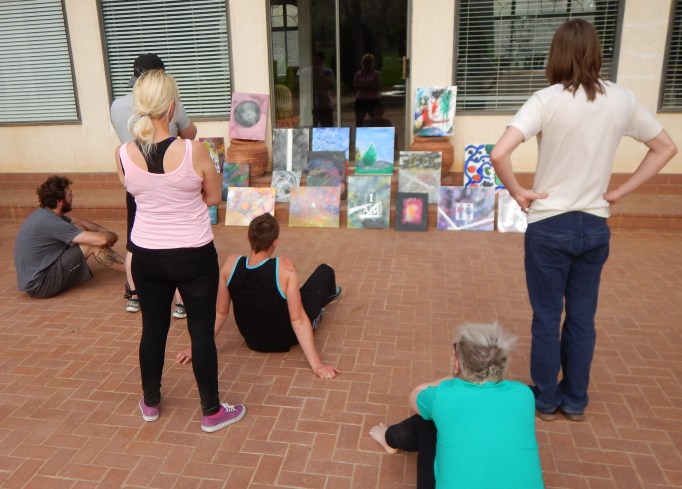
Expressive therapy, also known as the expressive therapies, expressive arts therapy or creative arts therapy, is the use of the creative arts as a form of therapy. Unlike traditional art expression, the process of creation is emphasized rather than the final product. Expressive therapy is predicated on the assumption that people can heal through use of imagination and the various forms of creative expression.

Art therapy is a mental health profession in which clients, facilitated by the art therapist, use art media, the creative process, and the resulting artwork to explore their feelings, reconcile emotional conflicts, foster self-awareness, manage behavior and addictions, develop social skills, improve reality orientation, reduce anxiety, and increase self-esteem.

At The Retreat At Zion (RAZ) we are seeing miraculous healing and recovery
through art!!!!!!!!!
Kevin  Brough

Self Sustainability

HRP Elements 3

Nature combines the elements of Earth, Water, Fire, and Wind to create beauty and abundance in a self sustaining bio diverse way. Through exposure to light and air growth occurs.

Humans thrive in a similar fashion! Through accessing and using innate resources combined with breath and light, growth and contribution will manifest. When an individual chooses to live in a healthy self sustaining way resources are built, not burned. Wake up! Revive from unconscious living and reclaim who you are, full purpose, and deep meaning.

Be your true self, “the world needs you”. Human diversity is necessary for the self sustainability of humanity. The sacred tree of life will grow and nurture all, as we live in a more symbiotic manner.

Reclaim Yourself and Revive Your Life!
As we revive mother earth and return natural bio-diversity to the land, the work and intent also touches and revives the “Soul” of everyone involved.

The Human Revival Project is about making the simple things in life sacred.

The Human Revival Project is about communion with the land and the Creator, while reclaiming, creating, and supporting natural balance in our selves and in our lives.

It is time to “REVIVE” who we really are and start living authentically.

Get your VIVE* back! (*Life & Vibe)

Join our project. Join our mission.

Kevin at http://www.retreatatzion.com

The Sacred Path

Our “SACRED JOURNEY” – Is A Holistic (Soulistic) experience of reclamation and transformation that starts with integration of all parts of ourselves into our complete and whole soul. This approach creates ultimate health of “Heart, Mind, Body & Spirit. Taking Actions, Developing Skills, and Harnessing Mental Processes that “Make A Real Difference” in our behavior and lives. When we are congruent and honor who we truly are we own and see our highest self and align with inner wisdom to be that person one step at a time.

This is a process that can bring “Clarity” and Courage to:

  • “Realize” – Where you’re at
  • “Visualize” – What you really want
  • “Strategize” – How to create change to get there
  • “Actualize” – Your plan, step by step for better results
  1. Start with the (physical), Cellular Balance builds a foundation for complete Body Balance.
  2. This physical balance leads the way for total Inner Balance (integrating emotional, mental and spiritual health with that of the body).
  3. All this allows the optimum Life Balance you seek.

Continued treatments using complementary and alternative modalities along with the best current medical support will reinforce a permanent chemical change in mind and body and will allow the electrical synapse system of the MindBody to rewire itself back to healthy patterns and the natural energy flow to heal and return us to our natural adaptability and flexibility.

Healing on a cellular level allows you the opportunity to take back your health, wellness and fitness. It will require a lot of hard work to change daily behavior patterns to those that will support continued healing, recovery, and optimum health to return. We need to include the following in our daily actions and activities.

  • Proper Nutrition, Rest, and Sleep
  • Exercise
  • Healthy activities and recreation
  • Self Care
  • 12 step meetings
  • Therapy
  • Creativity and Grounding Activities
  • Prayer and Meditation
  • Service and connection
  • & of course “Continued Abstinence” from what enslaved you!

These valuable investments of time and energy into ourselves will support the journey from Cellular Health and Balance to Physical Health and Balance. From Physical Health to adding complete inner balance and (Emotional, Mental, and Spiritual Health) for a Whole and Balanced Soul. Once we achieve this inner balance, peace and wholeness our higher path will lead to a life balance filed with the joy, love, meaning and the fulfillment we desire. With growth and contribution comes contentment and love.

Inner Voice III

redrockheader2

Part III of a series on Empowering Language Patterns:

Get rid of the word SHOULD.

Using statements like I should meditate…. solicit guilt, rebelliousness and maybe even shame…Thoughts like “Dammit why didn’t I, I was supposed to!!” soon follow. These shame and fear based thought patterns do not take you to a powerful place, but often undermine motivation and positive intentions/thinking.

Find another word that elicits better responses:

Wish – won’t motivate most people

I would like to – nope won’t bring urgency

I need to – not quite there to bring about action

I want to – getting closer to a commitment

I have to – to authoritarian for most (defensiveness and rebellion follow)

I must – sounds too desperate

I am going to – will work for some.. gives me a way out…

I will – a personal agreement is made…much closer to getting me to do it (I can visualize it and imagine myself doing it, and based on that feeling and imagery I actually may do it!)

Another powerful method is to take what you want to do and turn it into an action verb.

“I am meditating tomorrow morning at 7 AM”.     This should cause you to imagine not only doing it but the positive feeling, results, and benefits of doing it.

Questions: Do I see myself doing it in a certain place? Is it a movie, a video or a still picture? If it is a still picture, then I want to find better wording!  I am meditating tonight! Turns it into a video clip. You can play with words and get it into a vibrant, colorful movie which will flow ( a little short movie) – chances are that you are 10 times more likely to do it. An emotional/physical state of being shift actually occurs and you can see the benefits of what you will gain from that, and then make a decision or commitment to do it.. The more detail to your imagery and the deeper you see, hear, feel, taste, and smell the difference the more energy you will have in your motivation to take action.

We do this from the negative side too creating negative video tapes…but the more positive imagery tapes we make to offset the negative the more empowered we will be to take right actions!
Values & Virtues

Virtue based ethics can be interpreted many ways since there is such a variation of moral beliefs and various definitions of what is virtuous. For the most part virtue ethics has advantages since there is many universal virtues or much common ground when it comes to what is ethical. The biggest disadvantage is that there are differences among cultures, times in history, and even in between groups, organizations, tribes, and families in certain types of virtue based beliefs. I believe Kant’s duty-based theory overlaps and is very easily integrated with virtue ethics since most duties are virtue based. As I explore more about virtue based ethics and Kant’s theories in this blog I will expound on how these two belief systems could be merged.

It is pretty easy to explore virtue ethics from a deontological and a consequentialist viewpoint. Under deontology it is simple to see virtues as rules of what is right and wrong and that an individual has a duty to honor such virtues for personal peace and to serve a greater good. Through the viewpoint of consequentialism it also seems clear that the majority of results or consequences that are good or virtuous can only come through actions that are also virtuous, good, or right.

Based on Kant’s Doctrine of Virtue and his duty-based theory a person can only be truly happy and have their life flourish if they are living in accordance to their virtues and duty to honor and respect themselves and others. Where so many people have a commonality among their beliefs of what are acceptable or even expected norms as far as what are virtuous beliefs, intentions, and actions/behaviors it seems that the world would be far more peaceful if everyone lived up to this duty to honor self and others. This level of commitment to others would even go farther if everyone also honored the universe in a similar fashion. By universe I mean animals, nature, mother nature, the earth, places, things, cultures, etc., etc..

As stated above I believe Immanuel Kant’s duty-based theory fits hand in glove with virtue based ethics since the responsibility to honor or serve something greater than yourself comes as part of virtue or values based belief system. Both Plato and Aristotle spoke and taught of virtue based beliefs being a motivation for much of what a person thought, said, and did. So many Eastern based philosophies are based on doing what is good for self and others because it is the only way one can have peace and happiness. Many spiritual and religious beliefs are based on doing unto others as you would want done unto yourself. In most cultures common virtues such as generosity, loyalty, honesty, and courage are aspired to.

Approaching life with a goal to live a more virtue centered life may at times have the dilemma of potential ethnocentrism, where we judge others as we judge ourselves, wanting us all to fit perceived norms and expectations. It would seem one of the most important parts of virtue ethics and duty-based living is to value openness and forgiveness with ourselves and others and let go of those rigid expectations. We will never have the peace, joy, and love in our life we often seek if we cannot be satisfied enough to be happy, while still remaining unsatisfied enough to continue growth. Self-acceptance, and the acceptance of others “as they are” may be the highest virtue of all.

Care Giving

Care-taking VS Care-giving.  There are crucial differences between care-taking and care-giving and you will notice: the healthier and happier your relationship, the more you are care-giving rather than care-taking.

Care-taking and care-giving can be seen as a continuum.  We usually aren’t doing both at the same time.  The goal is to do as much care-giving as possible and to decrease care-taking.  Care-taking is a dysfunctional, learned behavior that can be changed.  We want to change so we can experience more peace, contentment, and better relationships. Intimates in your life may resist your healthier actions, but shifting to care-giving is a huge gift you are bestowing upon your loved ones. (Even when they do not see it at first)

The first step is identify loved ones that are care-taking you. (anyone in your life that you have given permission to watch over (Judge your decisions and or problems) Do you ask for opinions or advise in unhealthy ways? Do you ask or expect others to help carry your burdens, consciously or sub-consciously? Do you consistently go to the same people for help or support in a way that has allowed them to think you NEED them?. Are you giving them some control of your decisions or at least creating a dynamic of needing their wisdom instead of your own?

After you identify who is care-taking you, then ask yourself what role you play to keep that dynamic going. Care-taking is a hallmark of codependency and is rooted in insecurity and a need to be in control, or give up some responsibility or control to another.

Care-giving is an expression of kindness and love, and is based on altruistic empathy with no expectation or ego based attachment to outcome. When we truly allow autonomy the other persons success or failure is their own and should have no effect on how we feel about the help, support, and love we gave or attempted to give.

Here are some key differences between care-taking and care-giving:

  • Care-taking feels stressful, exhausting and frustrating.  Care-giving feels right and feels like love.  It re-energizes and inspires you.
  • Care-taking crosses boundaries.  Care-giving honors them.
  • Care-taking takes from the recipient or gives with strings attached; care-giving gives freely.
  • Caretakers don’t practice self-care because they mistakenly believe it is a selfish act.
  • Caregivers practice self-care unabashedly because they know that keeping themselves happy enables them to be of service to others.
  • Caretakers worry; caregivers take action and solve problems.
  • Caretakers think they know what’s best for others; caregivers only know what’s best for their selves.
  • Caretakers don’t trust others’ abilities to care for their selves, caregivers trust others enough to allow them to activate their own inner wisdom and problem solving capabilities.
  • Care-taking creates anxiety and/or depression in the caretaker.  Care-giving decreases anxiety and/or depression in the caregiver.
  • Caretakers tend to attract needy people.  Caregivers tend to attract healthy people.  (Hint:  We tend to attract people who are slightly above or below our own level of mental health).
  • Caretakers tend to be judgmental; caregivers don’t see the logic in judging others and practice a “live and let live attitude.”
  • Caretakers start fixing when a problem arises for someone else; caregivers empathize fully, letting the other person know they are not alone and lovingly asks, “What are you going to do about that.”
  • Caretakers start fixing when a problem arises; caregivers respectfully wait to be asked to help.
  • Caretakers tend to be dramatic in their care-taking and focus on the problem; caregivers can create dramatic results by focusing on the solutions.
  • Caretakers us the word “You” a lot and Caregivers say “I” more.

As with changing any behavior, becoming aware of it is the first step.  Watch yourself next time you are with someone and ask yourself where you fall on the continuum.  It will take some work to change and you may experience some resistance and fear in the process — but what is on the other side is well worth the struggles of transformation.

Remove yourself from being taken care of in kind ways, and learn to accept care-giving instead. (This may be from new intimates or from shifting existing relationships)

Become a Caregiver yourself. Give freely non-attached to outcome. Guide don’t direct, and ask questions to help others discover their inner wisdom instead of assuming they need your profound wisdom.

Traveling from co-dependency to in-dependency and then hopefully to interdependency in our relationships is difficult but not impossible. We all are entangled and connected. We all need to support and love and be supported and loved as we move through challenges and seasons in our lives.

Happy Care-giving;-) !!!!

Free Agency

I believe the determinist view that desires are the cause of all actions we take, is not a truly accurate viewpoint of what determines either deliberate or unintentional actions. I do think that many behaviors are determined by our thinking and motivated by feelings that those thoughts bring about. The problem with determinism alone as the explanation of all action is that our intentions versus behavior are a far more complicated than just desires alone. Determinism alone does not explain the full complicated process of human behavior.
The duality of man is maybe more than a struggle in between just two parts of the individual. I can see how at times the heart, mind, body, and spirit all have different agendas and that a person’s actions both individually and in pattern are not just a result of this struggle but of even many more additional forces. The additional impact of the past through memories and prior experience can effect greatly how one interprets the present and perceives the future and that can cause someone to act in ways in-congruent with who they are and what they want. The pressure put on individuals by significant others, groups, and society also effect greatly a person’s actions and behaviors. Does a person truly have autonomy and freedom to do as they want, I don’t think fully, due to all of these contributing factors. But all actions are not determined.
Freedom over automatic subconscious actions comes through awareness. The more one works to bring the heart, mind, body, and spirit into a harmonious and symbiotic relationship the more a person can learn to act consciously and have their intentions and actions aligned. Emotions do carry all of the energy used to motivate actions but those energies can be rerouted to meet objectives and higher motives than just desires. The context in which one acts certain ways can be changed to be integral with behaviors that have a higher purpose. Integrity means to come together and honor all of you. When this is done the freedom of more conscious choices increases. The opposite is also true when people give into base desires or addictive thoughts, feelings, and behaviors, freedom is diminished.
The interpretation of memories and experiences that drive autonomic reactions when we perceive similar situations can drive behavior before thought. Man can also choose to relearn or put into new contexts those same prior experiences and change their interpretations of the past. In this way a person can change the meaning of their past learning’s and take back the power of conscious choice. As context and meaning changes so will the actions and behaviors. When we are open to change we can learn to live more as we intend to, instead of deliberate or unintentional actions that really are not congruent with the intentions of our hearts.
People can also learn to walk a path that is true to their own self instead of trying so much to please others, fit in to a group, or societal norms.

When you break free of expectations I believe you are also free to be as you want to be and do what you truly want to do. Re-framing beliefs, waking up and being aware more of the time, and being true to ourselves before others will bring more freedom. Determinism does not take into account so much of what causes or influences behavior and even though we go on auto pilot too often, we can have more and more freedom than we think we can, and we deserve it.