
Gray’s BAS/BIS Theory
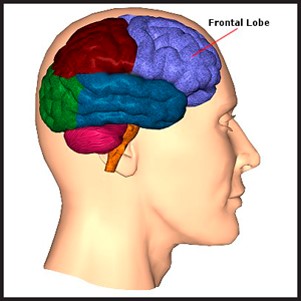
- Proposes that personality is based on the interaction of two basic systems in the brain:
1. Behavioral Activation System (BAS): The accelerator (“hit the gas”)
– Impulsivity, novelty seeking, sensitivity to rewards and motivation to seek rewards.
–Attraction to a person or a cookie and a desire to approach the person or cookie, especially a “new” one?
- High BAS = Lots of positive affect (PA); Low BAS = Less PA
- High BAS = Impulsive; Low BAS = Reserved and Careful
- High BAS = Extraversion; Low BAS = Introversion
BAS = Left Frontal Lobe:
- Active while experiencing positive emotion (happiness).
2. Behavioral Inhibition System (BIS): “Hitting the brakes”. Sensitivity to potential punishment and motivation to avoid punishment.
–Fear of rejection by someone you fancy or fear of a snake and the motivation to avoid these things comes from this system.
-Avoidance of people, places, and situations that have the perception of causing potential pain?
- High BIS = negative emotions (fear, anxiety)
- High BIS = inhibits movement toward goals
- High BIS = High Neuroticism; Low BIS = Low Neuroticism
But……Low BIS also = High Psychoticism
BIS = Right Frontal Lobe:
- Active while experiencing negative emotion (fear, anxiety).
- Active when presented with an incentive.
How does this effect behavior and coping methods? Can it be the underlying mental processing that fuels addictive behavior, especially when deeper obsessive and compulsive patterns emerge?
Happy Eat your Vegetables Day!!! – What’s your favorite vegetable?
A Neuro-anatomical Model
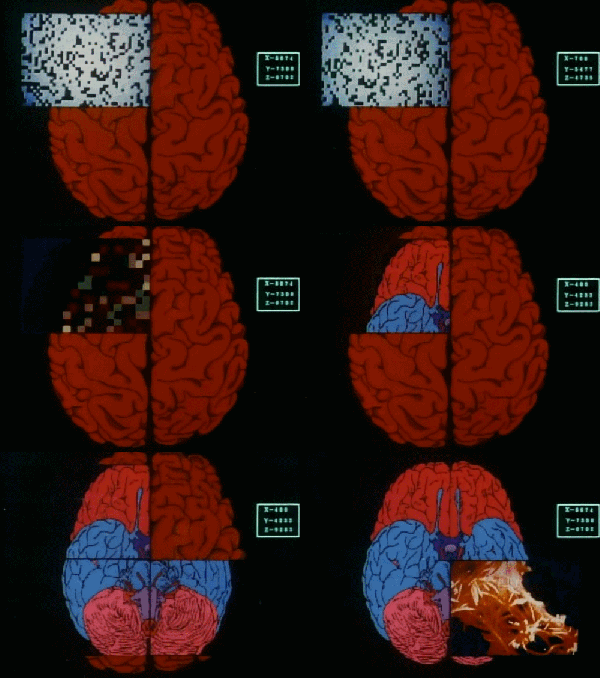
A Neuro-anatomical Model
Altered stress systems progressively impact on dopaminergic networks to cause the neuro-anatomical “brain signatures” of addiction (17).
Reward – stress activates the DS (87) and substance-related cues elicit dopamine release in DS (88) in line with addiction severity, suggesting the strengthening of substance-related habits as addiction progresses. This reflects a shift in reward processing from the VS to DS.
Stress and dopamine are both involved in habit learning (89, 90). Lesions to the DS dopamine prevent habit formation (91).
Memory – elevated stress triggers excessive engagement of habitual processes, by changing the role of memory systems in behaviour. For example, acute stress before a learning task results in a predominantly habitual rather than a cognition-based role of memory in task completion (35).
Chronic stress causes opposing structural changes in neural networks subserving goal-directed and habitual action, with PFC atrophy and DS hypertrophy (35). Bias toward habitual responding…
View original post 513 more words


Cognitive Bias Modification
Cognitive biases directly affect the way we perceive and process sensory and memory data. Several types of cognitive biases effect how we perceive, think, and feel (Mathews & Mackintosh, 2000).
The specific types of cognitive biases are:
- Attention Bias explaining how things are seen, heard, and felt, that individuals subconsciously choose to perceive based on their current paradigm and ignore what conflicts with beliefs (Salemink, Hout, & Kindt, 2007). Individuals delete, distort, and generalize data so it aligns with their biases (Salemink et al., 2007).
- Interpretation Bias is when the sensory data perceived and accepted is interpreted in a way that fits into or supports one’s biases.
- Memory Bias occurs when individuals recall prior experiences, thoughts, and imagery that supports their current biases (Hertel & Mathews, 2011)).
More emotional individuals may have vulnerabilities to cognitive biases that contribute to more negative processing of the sensory data available and this contributes to emotional distress being more prevalent (Standage, Ashwin, & Fox, 2010). Additionally, modified cognitive biases induce or influence an individual’s emotional state (Hirsch, Mathews, & Clark, 2007). Persistent focus on negative biases in attention, interpretation, and memory are thought to induce these higher levels of emotional vulnerability and more prevalent mood instability (Standage, Harris, & Fox, 2014).
Cognitive Bias Modification (CBM) procedures are designed to modify interpretative biases, and are particularly vulnerable to inducing changes in cognition and mood (Holmes & Mathews, 2005). Many CBM procedures have been developed (Standage, Ashwin, & Fox, 2009), and mood changes tend to be significant following treatments (Standage et al., 2010). Positive or negative CBM depict congruent changes in the emotional response, depending upon the context of stimuli (Mathews & Mackintosh, 2000), thus implying that individuals can be “trained” to manifest particular mood states (Standage etal., 2010).
Social comparison processing may be an important moderator of CBM as people become biased as they conform to social norms (Standage et al., 2014). Just as individuals suffering from depression tend to demonstrate a heightened elaboration on negative stimuli, an intensified predisposition to attend to negative stimuli and engage in rumination is a precursor for clinical disorders (MacLeod & Bucks, 2011). This demonstrates the significance of negative attentional focus contributing to negative biases during the interpretation process. CBM can help with the management of self-regulation and maintenance of debilitating emotional disorders (Joorman, Waugh, & Gotlib, 2015), by utilizing instrumental, strategic control of thought patterns and attention selectivity (MacLeod & Bucks, 2011).
Visual text base CBM procedures have been found to elicit the most significant effect on changing interpretations and moods (Standage et al., 2009). Participants who engaged in visual CBM procedures that appraised positive and negative statements have shown a congruency in their interpretive mood bias, either positive or negative (Holland, Tamir, and Kensinger, 2010). Specifically, CBM participants who read about positive but ambiguous situations, then made more positive decisions, while participants who read about more negative ambiguous scenarios followed with more negative decisions or resolutions (Standage et al., 2009). Therefor, it is concluded that appropriate positive and negative interpretative biases are induced by CBM procedures.
An Excerpt from
Mood Modification in Introverted and Extraverted Personality Types
By
Ashleigh Brinkerhoff
Kevin Brough
Tina Brough
Taylor Sullivan
“No matter what people tell you,words and ideas can change the world.”-Robin Williams.

“No matter what people tell you,words and ideas can change the world.”-Robin Williams..

“I stand upon my desk to remind myself that we must constantly look at things in a different way.”
-John Keating (Robin Williams)
Dead Poets Society

Cognitive Distortions
We have a new page!
This page will look at the myriad of cognitive distortions and preservative (and deluded) thinking that appears to be part of the condition of many different addictive behaviours.
So far in this blog we have looked at how altered stress systems effect emotion processing and regulation and how this results in the increasingly compulsive need to use substances and behaviours to regulate subsequent negative emotions and affect.
Now we will be looking at the third strata of this disorder of addictive behaviour, that of distorted preservative thinking. Perseverative thinking is when someone gets an idea or thoughts in their head and just can’t get them out.
It is commonly shared in 12 step meeting show we have a problem with our thinking and hence our decision making. We find this to be true for us also.
Some addictive behaviours have their own specific cognitive distortions…
View original post 315 more words

Things Change

Change:
“Change is the law of life. And those who look only to the past or present are certain to miss the future” – John F. Kennedy
“Progress is impossible without change, and those who cannot change their minds cannot change anything” – George Bernard
“If there is no struggle, there is no progress” – Frederick Douglas
“Since we cannot change reality, let us change the eyes which see reality” – Nikos Kanzantzakis
“If you don’t change direction, you may end up where you are heading” – Lao Tzu
Everyday, life changes, whether we accept those changes / events or not. Yesterday, I caught myself saying “if something didn’t go wrong, it just wouldn’t be an ordinary day”. I continued to think “it’s always something” and “I can’t have a day where something bad doesn’t happen”. Those are some of the most selfish statements I could make with the magnitude of my…
View original post 271 more words
 Balance Your Health