Inner Journey to Wellness
Attachment Style
Why do Attachment Styles affect our relationships?
Experience with early caregivers forms a working model, or RELATIONSHIP SCHEMA that impacts later relationships.
Secure Working Model
- Others are dependable, trustworthy, and supportive (benefit of the doubt).
- I am worthy of other people’s support and love.
62% are SECURELY ATTACHED:
As a Child
- Mother as a safe base.
- Upset when she leaves.
- Go to her lovingly when she returns.
As an Adult
I find it relatively easy to get close to others and am comfortable depending on them and having them depend on me. I don’t worry about being abandoned or about someone getting too close to me.
Insecure Working Model
- Others are expected to be undependable, untrustworthy, and UN-supportive.
- I am unworthy of other people’s support and love.
23% are AVOIDANT:
As a Child
- Initially do not seek proximity to the mother.
- Very little distress upon separation.
- Avoid/ignore her when she returns.
As an Adult
I am somewhat uncomfortable being close to others; I find it difficult to trust them completely, difficult to allow myself to depend on them. I am nervous when anyone gets too close, and often, others want me to be more intimate than I feel comfortable being.
15% are RESISTANT (AMBIVALENT):
As a Child
- Preoccupied with mother (Clingy).
- Great distress when the mother leaves
- Simultaneously seek close contact but also hit and kick (punishment).
As an Adult
I find that others are reluctant to get as close as I would like. I often worry that my partner doesn’t really love me or won’t want to stay with me. I want to get very close to my partner, and this sometimes scares people away.
HMMM? Something to think about.
Awareness provides fertile ground for Transformation!
Pure Mania in Bipolar Disorder

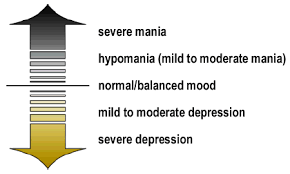
Mania and depression are two main parts of bipolar disorder.
Manic episodes can create pure chaos in a persons life and lead to impulsive, sometimes fatal decisions.
At Revealing Your True Self Blog, I identified mania and how manic episodes are part of Bipolar Disorder.
Please Check Out my Other Blog: Revealing Your True Self to receive more information about Pure Mania in Bipolar Disorder.
Movember, mental health, and alcohol abuse
Care Giving
Care-taking VS Care-giving. There are crucial differences between care-taking and care-giving and you will notice: the healthier and happier your relationship, the more you are care-giving rather than care-taking.
Care-taking and care-giving can be seen as a continuum. We usually aren’t doing both at the same time. The goal is to do as much care-giving as possible and to decrease care-taking. Care-taking is a dysfunctional, learned behavior that can be changed. We want to change so we can experience more peace, contentment, and better relationships. Intimates in your life may resist your healthier actions, but shifting to care-giving is a huge gift you are bestowing upon your loved ones. (Even when they do not see it at first)
The first step is identify loved ones that are care-taking you. (anyone in your life that you have given permission to watch over (Judge your decisions and or problems) Do you ask for opinions or advise in unhealthy ways? Do you ask or expect others to help carry your burdens, consciously or sub-consciously? Do you consistently go to the same people for help or support in a way that has allowed them to think you NEED them?. Are you giving them some control of your decisions or at least creating a dynamic of needing their wisdom instead of your own?
After you identify who is care-taking you, then ask yourself what role you play to keep that dynamic going. Care-taking is a hallmark of codependency and is rooted in insecurity and a need to be in control, or give up some responsibility or control to another.
Care-giving is an expression of kindness and love, and is based on altruistic empathy with no expectation or ego based attachment to outcome. When we truly allow autonomy the other persons success or failure is their own and should have no effect on how we feel about the help, support, and love we gave or attempted to give.
Here are some key differences between care-taking and care-giving:
- Care-taking feels stressful, exhausting and frustrating. Care-giving feels right and feels like love. It re-energizes and inspires you.
- Care-taking crosses boundaries. Care-giving honors them.
- Care-taking takes from the recipient or gives with strings attached; care-giving gives freely.
- Caretakers don’t practice self-care because they mistakenly believe it is a selfish act.
- Caregivers practice self-care unabashedly because they know that keeping themselves happy enables them to be of service to others.
- Caretakers worry; caregivers take action and solve problems.
- Caretakers think they know what’s best for others; caregivers only know what’s best for their selves.
- Caretakers don’t trust others’ abilities to care for their selves, caregivers trust others enough to allow them to activate their own inner wisdom and problem solving capabilities.
- Care-taking creates anxiety and/or depression in the caretaker. Care-giving decreases anxiety and/or depression in the caregiver.
- Caretakers tend to attract needy people. Caregivers tend to attract healthy people. (Hint: We tend to attract people who are slightly above or below our own level of mental health).
- Caretakers tend to be judgmental; caregivers don’t see the logic in judging others and practice a “live and let live attitude.”
- Caretakers start fixing when a problem arises for someone else; caregivers empathize fully, letting the other person know they are not alone and lovingly asks, “What are you going to do about that.”
- Caretakers start fixing when a problem arises; caregivers respectfully wait to be asked to help.
- Caretakers tend to be dramatic in their care-taking and focus on the problem; caregivers can create dramatic results by focusing on the solutions.
- Caretakers us the word “You” a lot and Caregivers say “I” more.
As with changing any behavior, becoming aware of it is the first step. Watch yourself next time you are with someone and ask yourself where you fall on the continuum. It will take some work to change and you may experience some resistance and fear in the process — but what is on the other side is well worth the struggles of transformation.
Remove yourself from being taken care of in kind ways, and learn to accept care-giving instead. (This may be from new intimates or from shifting existing relationships)
Become a Caregiver yourself. Give freely non-attached to outcome. Guide don’t direct, and ask questions to help others discover their inner wisdom instead of assuming they need your profound wisdom.
Traveling from co-dependency to in-dependency and then hopefully to interdependency in our relationships is difficult but not impossible. We all are entangled and connected. We all need to support and love and be supported and loved as we move through challenges and seasons in our lives.
Happy Care-giving;-) !!!!
We Need To Flow


Kermit the Frog gives a TEDx Talk, and Twitter loves it
Kermit Wisdom, nothing better.
“Moral injury” and those darn peer approaches
Great Insights

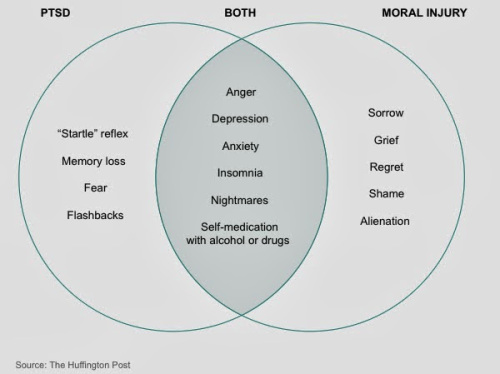
On Beingpicks up on a fascinating framing of PTSD from an episode of Religion and Ethics Newsweekly:
I really don’t like the term ‘PTSD,’” Department of Veterans Affairs psychiatrist Dr. Jonathan Shay told PBS’ “Religion & Ethics Newsweekly” in 2010. “He says the diagnostic definition of “post-traumatic stress disorder” is a fine description of certain instinctual survival skills that persist into everyday life after a person has been in mortal danger — but the definition doesn’t address the entirety of a person’s injury after the trauma of war. “I view the persistence into civilian life after battle,” he says, “… as the simple or primary injury.”
Dr. Shay has his own name for the thing the clinical definition of PTSD leaves out. He calls it “moral injury” — and the term is catching on with both the VA and the Department of Defense.
We’re turning our attention to…
View original post 547 more words
Free Agency
I believe the determinist view that desires are the cause of all actions we take, is not a truly accurate viewpoint of what determines either deliberate or unintentional actions. I do think that many behaviors are determined by our thinking and motivated by feelings that those thoughts bring about. The problem with determinism alone as the explanation of all action is that our intentions versus behavior are a far more complicated than just desires alone. Determinism alone does not explain the full complicated process of human behavior.
The duality of man is maybe more than a struggle in between just two parts of the individual. I can see how at times the heart, mind, body, and spirit all have different agendas and that a person’s actions both individually and in pattern are not just a result of this struggle but of even many more additional forces. The additional impact of the past through memories and prior experience can effect greatly how one interprets the present and perceives the future and that can cause someone to act in ways in-congruent with who they are and what they want. The pressure put on individuals by significant others, groups, and society also effect greatly a person’s actions and behaviors. Does a person truly have autonomy and freedom to do as they want, I don’t think fully, due to all of these contributing factors. But all actions are not determined.
Freedom over automatic subconscious actions comes through awareness. The more one works to bring the heart, mind, body, and spirit into a harmonious and symbiotic relationship the more a person can learn to act consciously and have their intentions and actions aligned. Emotions do carry all of the energy used to motivate actions but those energies can be rerouted to meet objectives and higher motives than just desires. The context in which one acts certain ways can be changed to be integral with behaviors that have a higher purpose. Integrity means to come together and honor all of you. When this is done the freedom of more conscious choices increases. The opposite is also true when people give into base desires or addictive thoughts, feelings, and behaviors, freedom is diminished.
The interpretation of memories and experiences that drive autonomic reactions when we perceive similar situations can drive behavior before thought. Man can also choose to relearn or put into new contexts those same prior experiences and change their interpretations of the past. In this way a person can change the meaning of their past learning’s and take back the power of conscious choice. As context and meaning changes so will the actions and behaviors. When we are open to change we can learn to live more as we intend to, instead of deliberate or unintentional actions that really are not congruent with the intentions of our hearts.
People can also learn to walk a path that is true to their own self instead of trying so much to please others, fit in to a group, or societal norms.
When you break free of expectations I believe you are also free to be as you want to be and do what you truly want to do. Re-framing beliefs, waking up and being aware more of the time, and being true to ourselves before others will bring more freedom. Determinism does not take into account so much of what causes or influences behavior and even though we go on auto pilot too often, we can have more and more freedom than we think we can, and we deserve it.
Zion Healing Grounds
 Balance Your Health