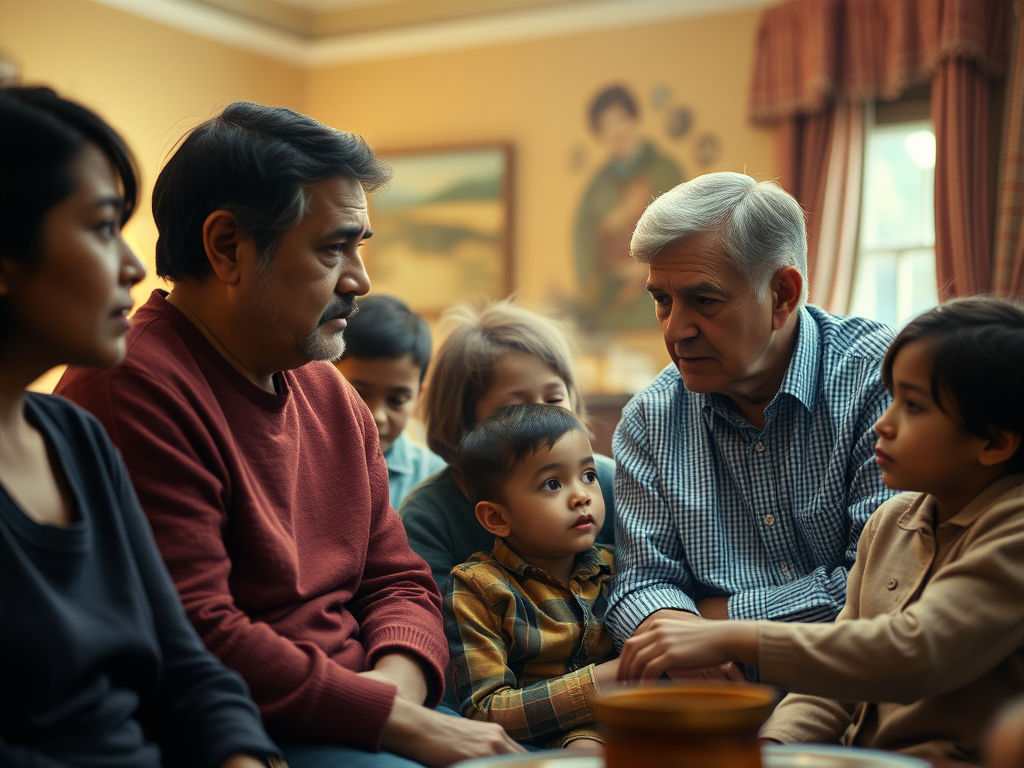
Understanding and Healing Multigenerational Trauma
Multigenerational trauma represents one of the most profound yet often overlooked aspects of human psychological inheritance. This phenomenon describes how traumatic experiences can echo through family lines, manifesting in behaviors, traits, and psychological patterns that persist across generations. Far from being limited to genetic transmission, these patterns also emerge through learned behaviors, family dynamics, and cultural practices shaped by historical trauma.
The Theory of Multigenerational Trauma
The concept of multigenerational trauma gained prominence in the 1960s through observations of Holocaust survivors’ children, who exhibited psychological symptoms despite not experiencing the Holocaust directly (Danieli, 1998). This phenomenon suggested that trauma could be transmitted across generations through mechanisms beyond direct experience.
Multigenerational trauma operates through several theoretical pathways:
- Biological transmission: Emerging research in epigenetics suggests traumatic experiences can modify gene expression without changing DNA sequences, potentially affecting future generations (Yehuda et al., 2016).
- Psychological transmission: Trauma alters parenting styles, attachment patterns, and family communication, creating environments where children internalize trauma responses (Brave Heart & DeBruyn, 1998).
- Sociocultural transmission: Cultural practices, narratives, and collective identity can preserve and transmit traumatic experiences across generations (Mohatt et al., 2014).
Evidence-Based Research
The field has moved beyond theory to substantial empirical evidence supporting the reality of trauma transmission across generations:
Epigenetic Research
Perhaps the most groundbreaking evidence comes from epigenetics, which explores how environmental factors influence gene expression without altering DNA sequences. Studies of Holocaust survivors and their offspring have identified specific epigenetic changes related to stress response.
Yehuda and colleagues (2016) found that children of Holocaust survivors showed altered expression of the FKBP5 gene, which regulates stress hormones, compared to control groups. This suggests that severe psychological trauma can leave a biological imprint that passes to subsequent generations.
Similar findings emerged in studies of descendants of famine survivors. Researchers examining the Dutch Hunger Winter of 1944-1945 found that prenatal exposure to famine was associated with epigenetic changes that persisted into the next generation (Heijmans et al., 2008).
Psychological Studies
Psychological research has documented specific patterns of behavior and emotional regulation transmitted through families affected by trauma:
Dekel and Goldblatt (2008) reviewed studies of families of war veterans with PTSD, finding that children often developed similar psychological symptoms, including hypervigilance, emotional numbing, and relationship difficulties, despite not experiencing combat themselves.
In a longitudinal study, Bowers and Yehuda (2016) demonstrated that parents with trauma histories often exhibit specific parenting behaviors, including overprotection, emotional unavailability, and inconsistent discipline patterns, that their children frequently internalize and repeat with their own children.
Cultural and Historical Trauma
Research on historical trauma among Indigenous populations has provided compelling evidence of multigenerational effects:
Brave Heart and DeBruyn’s (1998) foundational work on historical trauma among Native Americans demonstrated how forced relocation, cultural genocide, and other systemic traumas generated psychological distress that continues to affect contemporary generations, manifesting in higher rates of substance abuse, suicide, and mental health challenges.
Similarly, research with African American communities has documented how the intergenerational effects of slavery and ongoing racism create distinctive patterns of trauma transmission (DeGruy, 2005).
Clinical Applications and Healing Pathways
Understanding multigenerational trauma has profound implications for treatment approaches:
- Family systems therapy: Approaches that examine intergenerational patterns can help families identify and interrupt trauma transmission (Kerr & Bowen, 1988).
- Culturally responsive healing: Recognition of historical trauma has led to culturally specific healing practices that address collective wounds (Gone, 2013).
- Trauma-informed parenting interventions: Programs that help parents recognize how their trauma histories affect parenting can break transmission cycles (Lieberman et al., 2011).
Update (4/26/25)
The Exponential Inheritance: Ancestral Trauma Across Generations
When we consider the mathematical reality of our ancestral lineage, the potential scope of inherited trauma becomes staggering. We have 2 parents, 4 grandparents, 8 great-grandparents, and so on—doubling with each generation. By just 10 generations back (roughly 250-300 years), we each have over 1,000 direct ancestors. Extend to 15 generations, and that number exceeds 32,000 potential sources of inherited trauma patterns. We theoretically have over a million ancestors at 20 generations—approximately 500-600 years (Rutherford, 2016).
This exponential expansion means we potentially carry the biological and psychological imprints of countless individual traumas experienced throughout our ancestral lines:
Cellular Memory and Epigenetic Accumulation
Recent research has explored how trauma may be stored at the cellular level. Lipton’s (2015) work on cellular memory suggests that cells can retain imprints of past experiences, potentially influencing future generations. Though controversial, these theories align with growing epigenetic evidence.
Meaney and Szyf’s (2005) groundbreaking research with rats demonstrated how maternal behavior altered gene expression in offspring through DNA methylation patterns that persisted into adulthood. This suggests a mechanism through which trauma-influenced parenting behaviors could create biological changes that span generations.
More recently, Dias and Ressler (2014) discovered that mice conditioned to fear a specific odor passed this fear response to offspring who had never encountered the odor, through epigenetic modifications to olfactory receptors. This study provides compelling evidence for the biological transmission of specific trauma responses.
Cumulative Effects Across Time
The accumulation of trauma across multiple ancestral lines creates complex, overlapping patterns. Kellermann (2013) observed that descendants of Holocaust survivors often exhibited symptoms from numerous family members, suggesting a cumulative effect where various trauma responses combine and interact across generations.
Similarly, Rodriguez and colleagues (2021) found evidence that communities with histories of multiple collective traumas—such as colonization, slavery, and forced migration—show distinctive patterns of intergenerational effects that appear more complex than those stemming from single traumatic events.
This exponential inheritance model helps explain why certain families show remarkably persistent patterns across generations, even when family members have consciously tried to “break the cycle.” The sheer volume of ancestral influence creates a powerful momentum that requires deliberate, sustained effort to redirect.
As Crawford (2018) notes, “The mathematics of ancestry reminds us that healing intergenerational trauma is not simply about addressing our parents’ or grandparents’ experiences, but about recognizing the vast network of influences that shape who we are and how we respond to the world.”
Conclusion
The evidence for multigenerational trauma transmission through both biological and psychosocial pathways continues to grow. This understanding challenges us to view psychological health as an individual matter and part of an intergenerational continuum.
By recognizing these patterns, individuals and communities can initiate the profound work of healing not only their own wounds but also those inherited from previous generations—ultimately breaking cycles that might otherwise continue indefinitely.
Kevin Brough – Ascend Counseling & Wellness – Ascendcw.com – 435.688.1111 – kevin@ascendcw.com
References
Bowers, M. E., & Yehuda, R. (2016). Intergenerational transmission of stress in humans. Neuropsychopharmacology, 41(1), 232-244.
Brave Heart, M. Y. H., & DeBruyn, L. M. (1998). The American Indian holocaust: Healing historical unresolved grief. American Indian and Alaska Native Mental Health Research, 8(2), 56-78.
Danieli, Y. (1998). International handbook of multigenerational legacies of trauma. Plenum Press.
DeGruy, J. (2005). Post-traumatic slave syndrome: America’s legacy of enduring injury and healing. Uptone Press.
Dekel, R., & Goldblatt, H. (2008). Is there intergenerational transmission of trauma? The case of combat veterans’ children. American Journal of Orthopsychiatry, 78(3), 281-289.
Gone, J. P. (2013). Redressing First Nations historical trauma: Theorizing mechanisms for indigenous culture as mental health treatment. Transcultural Psychiatry, 50(5), 683-706.
Heijmans, B. T., Tobi, E. W., Stein, A. D., Putter, H., Blauw, G. J., Susser, E. S., Slagboom, P. E., & Lumey, L. H. (2008). Persistent epigenetic differences associated with prenatal exposure to famine in humans. Proceedings of the National Academy of Sciences, 105(44), 17046-17049.
Kerr, M. E., & Bowen, M. (1988). Family evaluation. W.W. Norton & Company.
Lieberman, A. F., Ghosh Ippen, C., & Van Horn, P. (2011). Don’t hit my mommy!: A manual for child-parent psychotherapy with young children exposed to violence and other trauma. Zero to Three.
Mohatt, N. V., Thompson, A. B., Thai, N. D., & Tebes, J. K. (2014). Historical trauma as public narrative: A conceptual review of how history impacts present-day health. Social Science & Medicine, 106, 128-136.
Yehuda, R., Daskalakis, N. P., Bierer, L. M., Bader, H. N., Klengel, T., Holsboer, F., & Binder, E. B. (2016). Holocaust exposure induced intergenerational effects on FKBP5 methylation. Biological Psychiatry, 80(5), 372-380.
Crawford, K. (2018). Ancestral healing in family therapy: The mathematics of intergenerational influence. Family Process, 57(3), 636-652.
Dias, B. G., & Ressler, K. J. (2014). Parental olfactory experience influences behavior and neural structure in subsequent generations. Nature Neuroscience, 17(1), 89-96.
Kellermann, N. P. (2013). Epigenetic transmission of Holocaust trauma: Can nightmares be inherited? The Israel Journal of Psychiatry and Related Sciences, 50(1), 33-39.
Lipton, B. H. (2015). The biology of belief: Unleashing the power of consciousness, matter and miracles (10th anniversary ed.). Hay House, Inc.
Meaney, M. J., & Szyf, M. (2005). Environmental programming of stress responses through DNA methylation: Life at the interface between a dynamic environment and a fixed genome. Dialogues in Clinical Neuroscience, 7(2), 103-123.
Rodriguez, T., Yehuda, R., & Nestler, E. J. (2021). Epigenetic mechanisms of transgenerational transmission of PTSD. Neuroscience Letters, 764, 136193.
Rutherford, A. (2016). A brief history of everyone who ever lived: The human story retold through our genes. Weidenfeld & Nicolson.
 Balance Your Health